
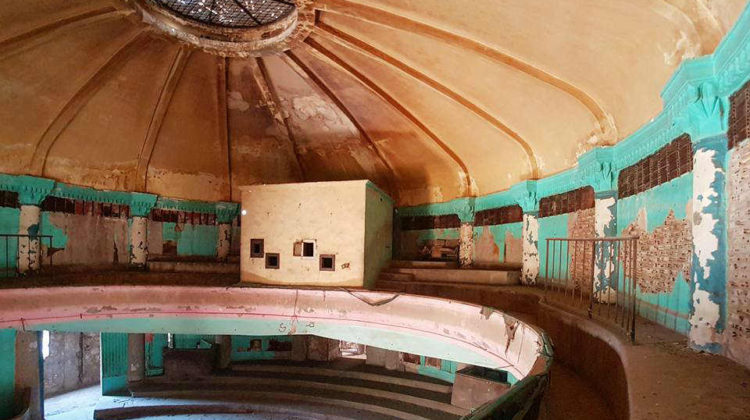
Le Grand Théâtre de Beirut, or Beirut’s Grand Theater, is one of the last remaining relics of pre-war Beirut. The landmark building was originally designed by Youssef Aftimos and built by Jacques Tabet in the 1920s, officially opening in 1929. The 630-seat theater includes an orchestra, two balconies, a stage equipped with specialized mechanisms, a small steel dome that moves on rails, and a decorative stained-glass ceiling in the lobby. Widely considered a cultural icon, it holds great historical significance for the city of Beirut.
Unfortunately, the Grand Theater has been abandoned since the end of the civil war and was further damaged during the 2020 Beirut port explosion. All plans to revive the theatre had been put on hold—until recently, when UNESCO, with $1 million in funding from the United Arab Emirates, launched a restoration initiative as part of its “LiBeirut” program, which aims to rehabilitate Beirut’s heritage and cultural sites. The UAE’s contribution came specifically from the Government of Sharjah, under the patronage of His Highness Sheikh Dr. Sultan bin Muhammad Al Qasimi.

The first phase of restoration focuses on stabilizing the structure and developing a cultural project in consultation with Lebanese authorities. After stabilization, the plan includes developing programming in partnership with local stakeholders.
While no specific timeline has been announced for the eventual reopening of the Grand Theater, multi-year durations are likely, depending on the extent of the damage, available funding, and design requirements.








[vivafbcomment]